
2026 6th International Conference on Neural Networks, Information and Communication Engineering (NNICE 2026)
| Prof. Jun WangIEEE/IAPR Fellow, Member of Academia Europaea City University of Hong Kong,China Bio: Jun Wang is a Chair Professor of Computational Intelligence in the Department of Computer Science at City University of Hong Kong. Prior, he held various academic positions at Dalian University of Technology, Case Western Reserve University, University of North Dakota, and the Chinese University of Hong Kong. He also held various short-term visiting positions at USAF Armstrong Laboratory, RIKEN Brain Science Institute, Shanghai Jiao Tong University, and Huazhong University of Science and Technology. He received a B.S. degree and an M.S. degree from Dalian University of Technology and his Ph.D. degree from Case Western Reserve University. He is the Editor-in-Chief of the IEEE Transactions on Artificial Intelligence and was the Editor-in-Chief of the IEEE Transactions on Cybernetics. He is an IEEE Life Fellow, IAPR Fellow, and HKAE Fellow, and a foreign member of Academia Europaea. He is a recipient of the APNNA Outstanding Achievement Award, IEEE CIS Neural Networks Pioneer Award, CAAI Wu Wenjun AI Achievement Award, and IEEE SMCS Norbert Wiener Award, among other distinctions. Speech Title: Intelligent Information Processing via Collaborative Neurodynamic Optimization Abstract: The past four decades have witnessed the emergence and growth of neurodynamic optimization, which has become a potentially powerful problem-solving tool for constrained optimization due to its inherent biological plausibility and parallel and distributed information processing capabilities. In recent years, a hybrid intelligence framework known as collaborative neurodynamic optimization has been proposed for addressing challenging optimization problems, including global optimization, combinatorial optimization, and mixed-integer optimization. In the context of collaborative neurodynamic optimization, multiple recurrent neural networks are employed for the scattered search of optimal solutions from different initial states, and a meta-heuristic rule is used to reinitialize neuronal states, thereby repositioning the search for global optimal solutions. This approach has been theoretically proved to be globally convergent and experimentally demonstrated to be effective for many applications. In this talk, I will present several specific paradigms in this framework for data processing, feature selection, supervised learning, and financial portfolio selection. |
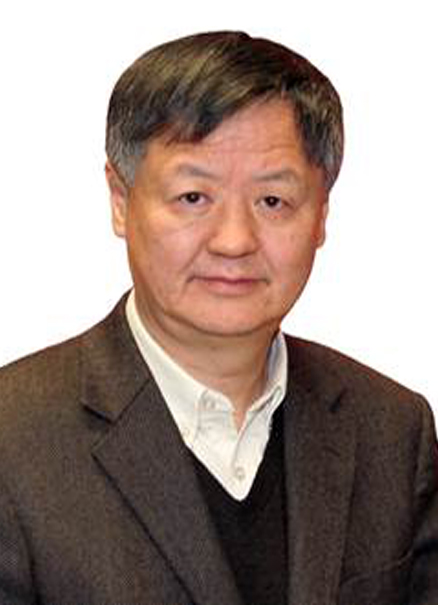
| Prof. Dapeng Oliver WuIEEE Fellow City University of Hong Kong, China Bio: Dapeng Oliver Wu received Ph.D. in Electrical and Computer Engineering from Carnegie Mellon University, Pittsburgh, PA, in 2003. Currently, he is Yeung Kin Man Chair Professor of Network Science, at the Department of Computer Science, City University of Hong Kong. His research interests are in the areas of artificial intelligence, communications, image processing, computer vision, signal processing, and biomedical engineering. He received University of Florida Term Professorship Award in 2017, University of Florida Research Foundation Professorship Award in 2009, AFOSR Young Investigator Program (YIP) Award in 2009, ONR Young Investigator Program (YIP) Award in 2008, NSF CAREER award in 2007, the IEEE Circuits and Systems for Video Technology (CSVT) Transactions Best Paper Award for Year 2001, the Best Paper Award in GLOBECOM 2011, and the Best Paper Award in QShine 2006. He has served as founding Editor in Chief of Transactions of Artificial Intelligence, Editor in Chief of IEEE Transactions on Network Science and Engineering, founding Editor in Chief of Journal of Advances in Multimedia, Editor-at-Large for IEEE Open Journal of the Communications Society, and Associate Editor for IEEE Transactions on Cloud Computing, IEEE Transactions on Communications, IEEE Transactions on Signal and Information Processing over Networks, IEEE Signal Processing Magazine, IEEE Transactions on Circuits and Systems for Video Technology, IEEE Transactions on Wireless Communications and IEEE Transactions on Vehicular Technology. He has served as Technical Program Committee (TPC) Chair for IEEE INFOCOM 2012. He was elected as a Distinguished Lecturer by IEEE Vehicular Technology Society in 2016. He is an IEEE Fellow. Speech Title: Game Theoretical Artificial Intelligence (GTAI): a New Approach for Countering Threats Abstract: As humans, we are facing threats every day, from biological ones (such as diseases) to computer viruses to criminals. Battling these threats is a part of our daily life. Game theory has long been employed to design countermeasures to deal with the threats. Nevertheless, the game-theoretical countermeasures lack human-level intelligence, such as strategic planning. On the other hand, recently, AI has become an important weapon to tackle these threats, owing to the ever-growing power of AI. In this talk, I will present a new approach, called Game Theoretical AI (GTAI), which combines the Eastern wisdom (Sun Tzu’s “The Art of War” and the Thirty-Six Stratagems) with the Western wisdom (game theory) to combat intelligent opponents. |
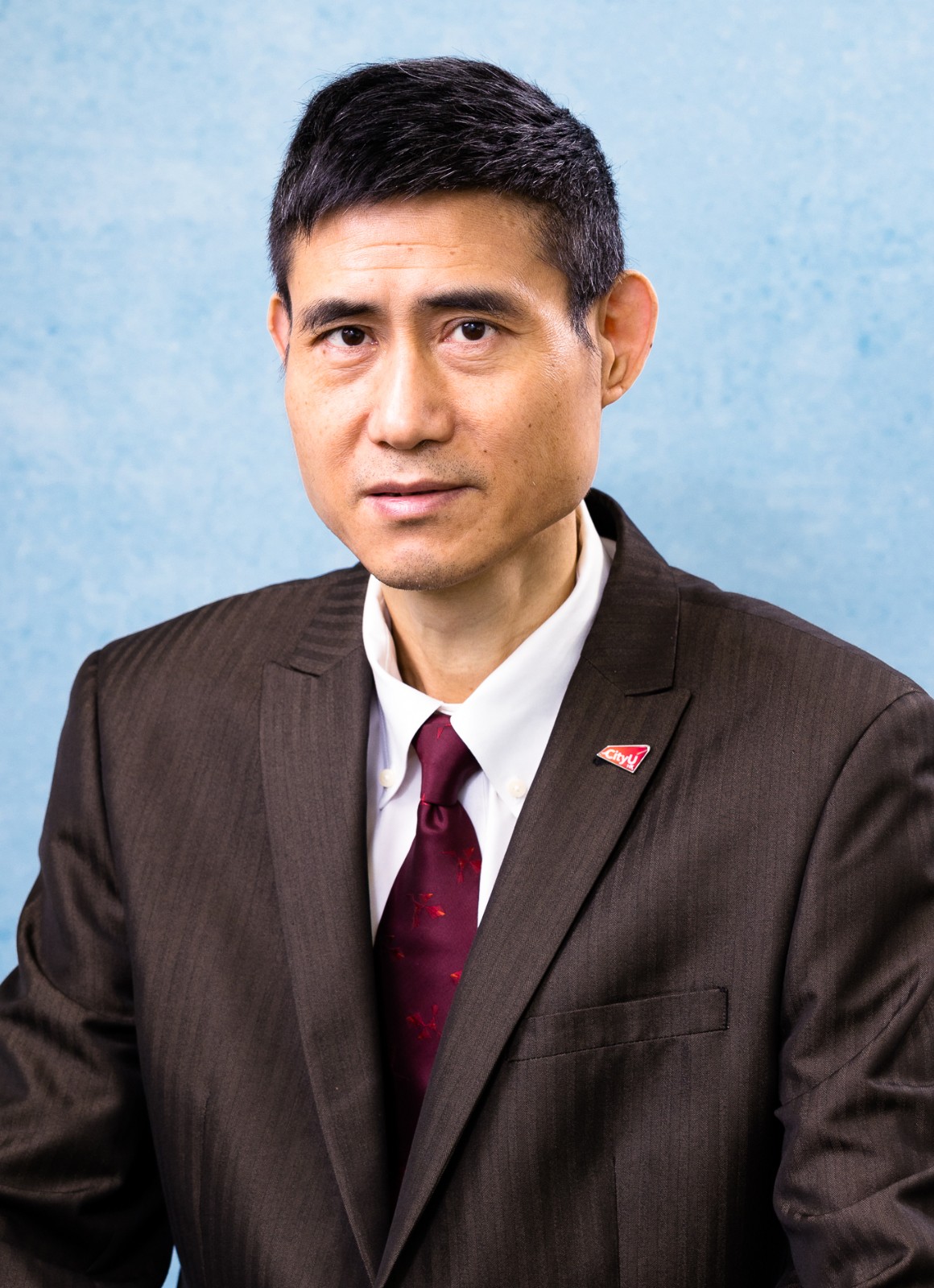
| Prof. Yuhui ShiIEEE Fellow Southern University of Science and Technology, China Bio: Prof. Yuhui Shi is an expert in the field of computational intelligence and the developer of the brain storm optimization (BSO) algorithm. He is also a fellow of IEEE for his contributions to particle swarm optimization algorithms. Prof. Yuhui Shi received his Ph.D. from Southeast University in 1992. After that, he did research in the United States, South Korea, Australia, and other places. He has published many ground-breaking papers with Russell Eberhart and James Kenney, the developer of the particle swarm optimization algorithm, and co-authored the books on Swarm Intelligence and Computational Intelligence: Concepts to Implementations. Speech Title: Robot Pursuit with Co-Evolution Abstract: This talk is aboutrobot pursuit with co-evolution. First the cooperation of predating robots (predators) to pursue escaping robot (prey) is formulated as a dynamic optimization problem, which is suitable for swarm intelligence algorithms to solve. Since each predator can only be at one place at any instance, which makes the commonly used Pittsburgh-type individual representation not suitable or at least not convenient to use, therefore, the Michigan-type individual representation together with its weakness will be introduced in the second part. Due to the intrinsic characteristic of the cooperation among the predators, the co-evolution will be then introduced. Final, a co-evolutionary particle swarm optimization algorithm, which is a combination of modified Michigan-type individual representation and co-evolution and is specifically designed to solve the dynamic optimization problem formulated for the robot pursuit problem, will be described in detail and validated with experimental results. |

| Assoc. Prof. Jinpeng ChenBeijing University of Posts & Telecommunications, China Bio: Jinpeng Chen, Associate Professor, Doctoral Supervisor, Vice Dean, School of Computer Science (National Exemplary School of Software), Beijing University of Posts and Telecommunications. He has presided over or participated in more than 40 projects at the national, provincial, ministerial and enterprise levels, and published over 100 academic papers, including those categorized as CCF Class A and Class B. He is the recipient of honors such as the Best Paper Award at ICONIP 2022, the Zhou Jiongpan Excellent Young Teacher Motivation Award, the "Chuan You 70 · Pioneer of Truth-Seeking and Innovation" Title, and the National First-Class Undergraduate Course Award. Currently, he serves as a Member of the Technical Committee on Intelligent Services of CAAI, Executive Member of the CCF Big Data Experts Committee, Executive Member of the CCF Technical Committee on Artificial Intelligence and Pattern Recognition, and Member of the CIPS Technical Committee on Social Media Processing. He also holds the positions of Editorial Board Member of Scientific Reports, Young Editorial Board Member of Big Data Mining and Analytics (English Edition), and Executive Member of Computer Science. Speech Title: Sequential Recommendation Research Abstract: Most existing sequential recommendation models leverage deep learning methods to capture sequential features but only focus on single-session information, ignoring confounding factors in the recommendation process, cross-session relationships, and the global patterns embedded within them. Mainstream approaches rely on large-scale interaction sequences, while sequential data usually suffers from the sparsity issue. Although some methods attempt to incorporate cross-session data, they struggle to suppress noise and irrelevant information, leading to degraded recommendation performance. In addition, most models only rely on the co-occurrence of item IDs and fail to exploit rich semantic details, which limits their ability to capture fine-grained features. To address the above issues of preference confounding, data sparsity, isolated modeling of short sessions, and insufficient semantic utilization, this report will introduce a sequential recommendation research method based on preference-aware causal intervention, as well as a novel optimization framework of "hierarchical intent guidance + plug-and-play LLM semantic learning". |
